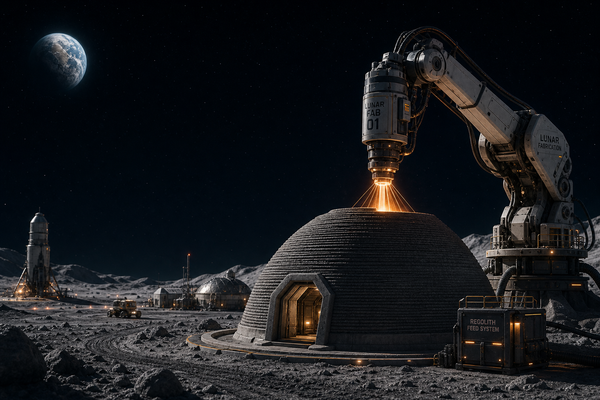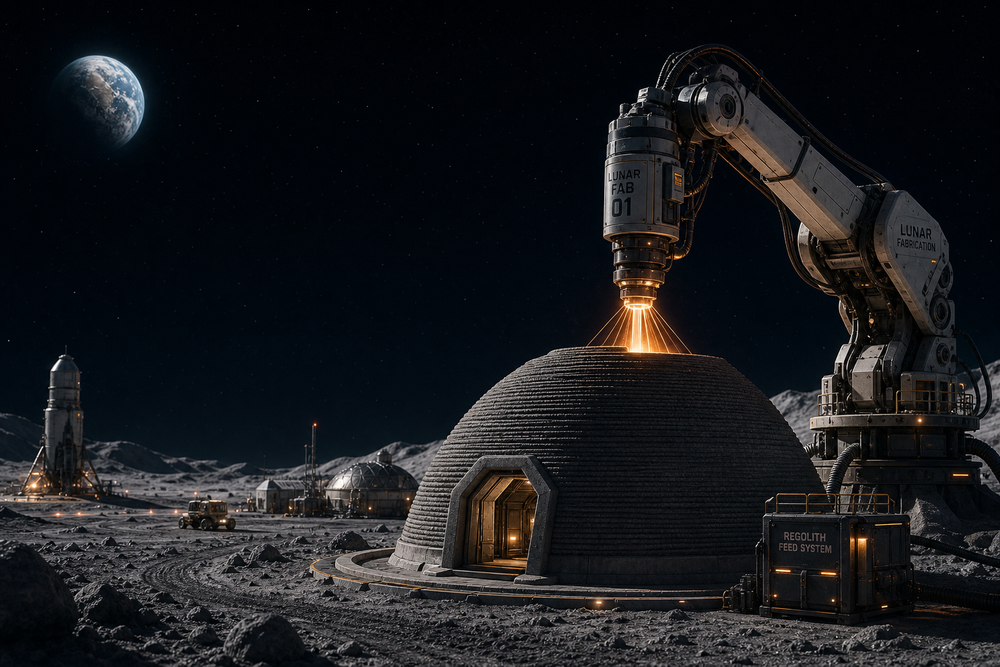
Building Lunar Bases: Regolith 3D Printing and Microwave Sintering
Moon Mining Deep Dive Series #5
🚀 Opening: Building Houses with Moon Dust
To build a base on the Moon, you need bricks. But shipping 1kg of bricks from Earth costs millions of dollars. The solution? Use regolith (lunar soil), abundant on the lunar surface, as construction material.
ESA's RegoLight project is turning this concept into reality. Heat lunar soil with microwaves and it becomes solid blocks. Stack them with a 3D printer and you have base walls.
🧱 Regolith: More Than Just Dust
Lunar surface regolith contains:
- 40-45% oxygen (by mass)
- 5-15% iron
- Various metals: aluminum, titanium, silicon
- Glassy materials (from meteorite impact melting)
Chemical Composition of Regolith
| Component | Content | Application |
|---|---|---|
| SiO₂ (Silicon Dioxide) | ~45% | Glass, ceramics |
| FeO (Iron Oxide) | ~15% | Iron extraction, magnetic materials |
| Al₂O₃ (Aluminum Oxide) | ~25% | Aluminum extraction |
| CaO (Calcium Oxide) | ~12% | Cement raw material |
| TiO₂ (Titanium Dioxide) | ~8% | Titanium extraction, shielding |
🔥 Microwave Sintering: Turning Soil into Stone
Principle
When microwaves (2.45 GHz) irradiate regolith:
- Iron components absorb microwaves and heat up
- Surrounding glassy materials melt
- Upon cooling, it solidifies into hard blocks
| Temperature | 1,000–1,200°C |
| Time | Minutes to tens of minutes |
| Energy Source | Solar → Electricity → Microwave |
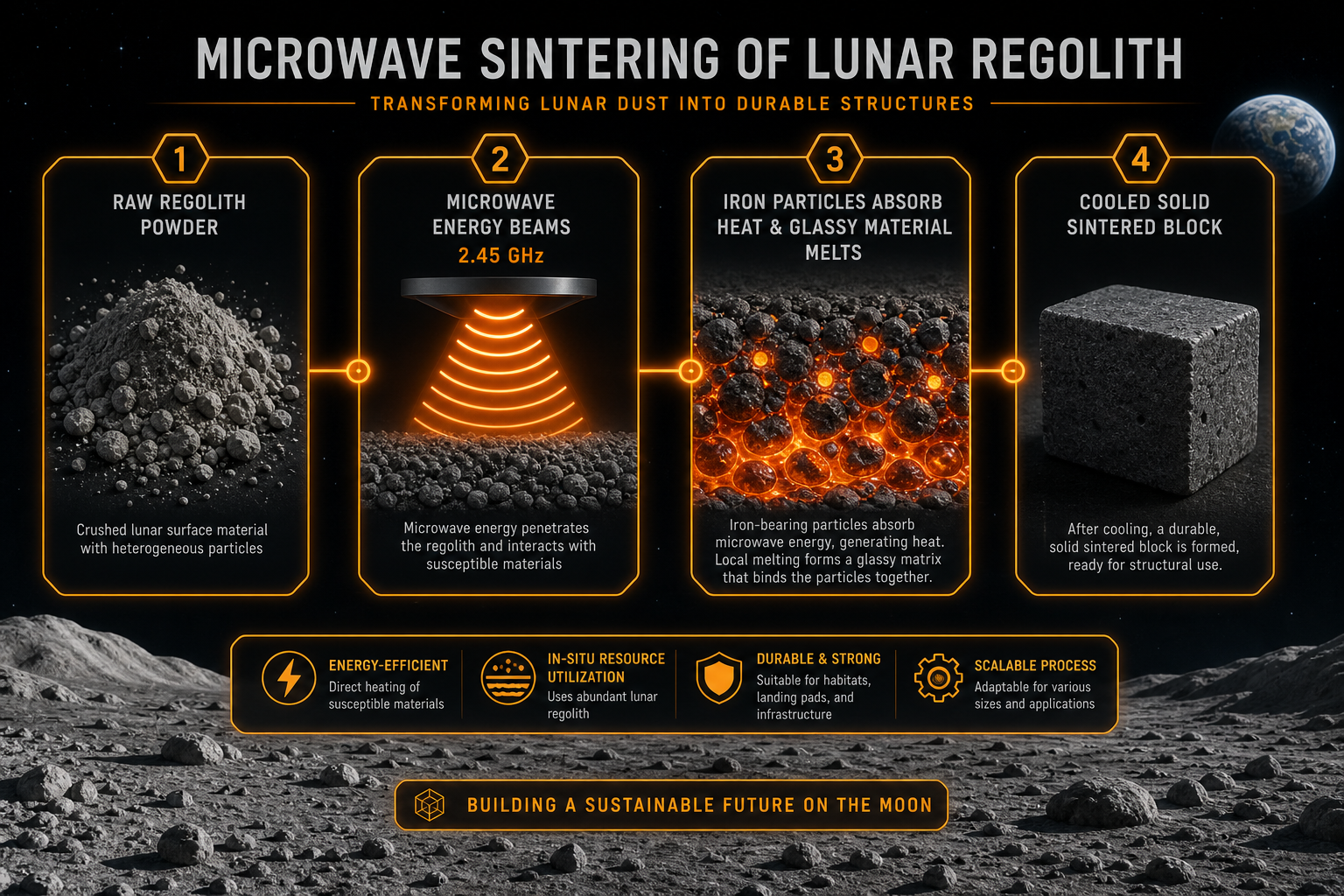
Microwave sintering process: regolith → microwave heating → melting → sintered block
ESA RegoLight Project
Goal: Produce construction blocks from lunar soil
| Phase | Content | Status |
|---|---|---|
| 1. Simulation | Regolith chemical property analysis | ✅ Complete |
| 2. Lab Testing | Microwave sintering experiments on Earth | ✅ Complete |
| 3. Vacuum Testing | Lunar environment (vacuum) simulation | 🔄 In Progress |
| 4. Lunar Surface Test | Using actual regolith samples | ⏳ Planned |
Properties of Sintered Blocks
| Property | Value | Note |
|---|---|---|
| Compressive Strength | ~20 MPa | ~1/5 of Earth concrete |
| Applications | Walls, shielding, roads | Structural reinforcement needed |
| Advantages | Durability, radiation shielding | Suitable for lunar environment |
🖨️ Regolith 3D Printing: A New Frontier in Additive Manufacturing
Concept
Similar to Earth's concrete 3D printing:
- Process regolith into printable form (powder or slurry)
- Layer by layer deposition via 3D printer head
- Sinter or cure each layer
NASA Research
NASA has been discovering regolith 3D printing technology through contests and prizes:
| Program | Content | Result |
|---|---|---|
| 3D-Printed Habitat Challenge | Lunar base 3D printing competition | Multiple teams succeeded |
| Centennial Challenges | Innovative technology discovery | Ongoing |
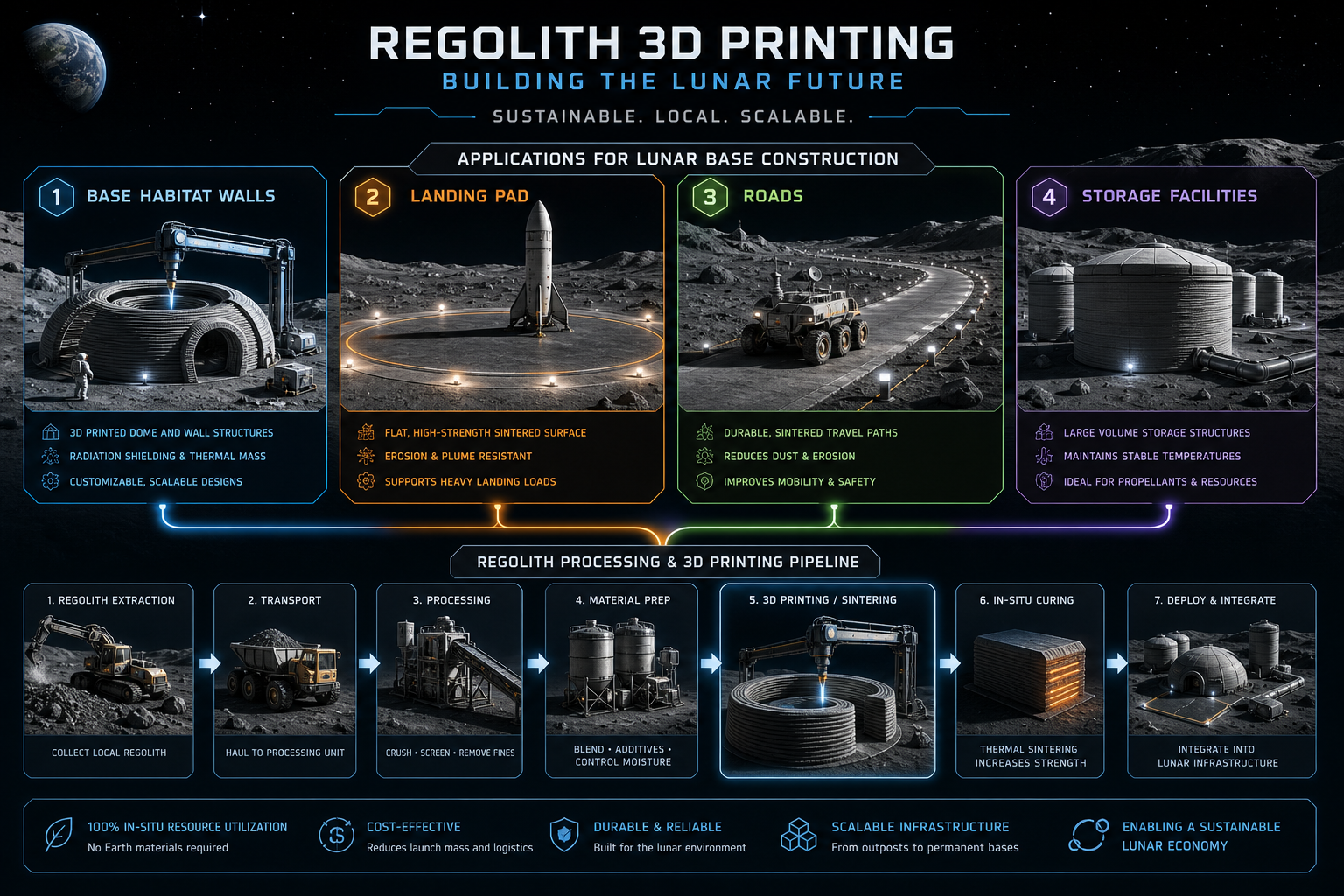
Regolith 3D printing applications: base walls, landing pads, roads, storage facilities
Application Examples
| Structure | Production Method | Purpose |
|---|---|---|
| Base Walls | 3D printing + sintering | Living space, radiation shielding |
| Landing Pad | Sintered block paving | Rocket exhaust gas defense |
| Roads | Sintered surface | Rover transport routes |
| Storage | 3D printing | Materials, propellant storage |
🏗️ Economics of Lunar Base Construction
Cost Comparison
| Material | Earth Transport Cost | Local Production Cost | Savings |
|---|---|---|---|
| Bricks 1kg | ~$1,000,000 | ~$0 (regolith) | 100% |
| Concrete 1kg | ~$1,000,000 | ~$10 (energy) | 99.99% |
| Iron 1kg | ~$1,000,000 | ~$50 (extraction) | 99.995% |
Earth→Moon transport cost: ~$10,000–100,000/kg (Falcon Heavy baseline)
Construction Material Demand Forecast (Artemis Base Camp)
| Item | Estimated Demand | Material |
|---|---|---|
| Base Walls | Tens of tons | Sintered regolith blocks |
| Radiation Shielding | Hundreds of tons | Regolith + iron |
| Landing Pad | Thousands of tons | Sintered paving |
| Roads | Hundreds of tons | Sintered surface |
🔬 Related Technologies
Molten Salt Electrolysis
Melt regolith and separate oxygen with electricity:
- Oxygen: Life support, propellant
- Metals: Iron, aluminum, titanium recovery
Hydrogen Reduction
Reduce metal oxides with hydrogen:
- Input: Regolith + hydrogen (from water ice)
- Output: Pure metals + water vapor
The Future of Additive Manufacturing
Vision for lunar base construction:
Artemis Base Camp → Base A/B (3D printing) → Regolith Processing Plant (sintering + extraction + printing) → Lunar surface regolith mining
🎯 Key Data
| Indicator | Value | Source |
|---|---|---|
| Regolith Oxygen Content | 40-45% (by mass) | Apollo samples |
| Regolith Iron Content | 5-15% | NASA |
| Sintering Temperature | 1,000–1,200°C | ESA RegoLight |
| Sintered Block Compressive Strength | ~20 MPa | ESA experiments |
| Earth→Moon Transport Cost | ~$10,000–100,000/kg | Falcon Heavy |
| Local Production Savings | ~99.99% | Estimated |
🔮 Conclusion: The Moon as Humanity's First "Space Factory"
Regolith 3D printing and microwave sintering are not just construction technologies. They are the key to making the Moon a self-sustaining outpost. Building bases from lunar soil, producing oxygen, extracting metals — without relying on Earth's resources — this is the ultimate goal of ISRU.
In the next post, we'll forecast the commercialization roadmap for the lunar mining industry from 2026 to 2035.
Series Navigation:
- Previous: Magna Petra's Non-Destructive Mining: AI Digital Twin for Helium-3
- Next: 2026-2035 Lunar Mining Commercialization Roadmap (coming soon)
Written by: lunarpulse_
Tags: #moon-mining #regolith #3d-printing #microwave-sintering #ESA #NASA #construction